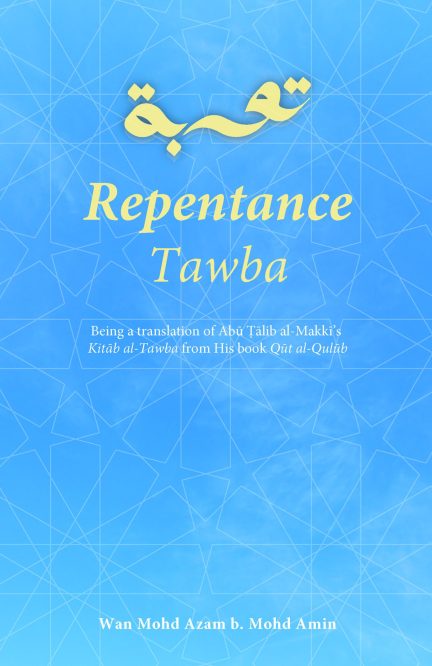
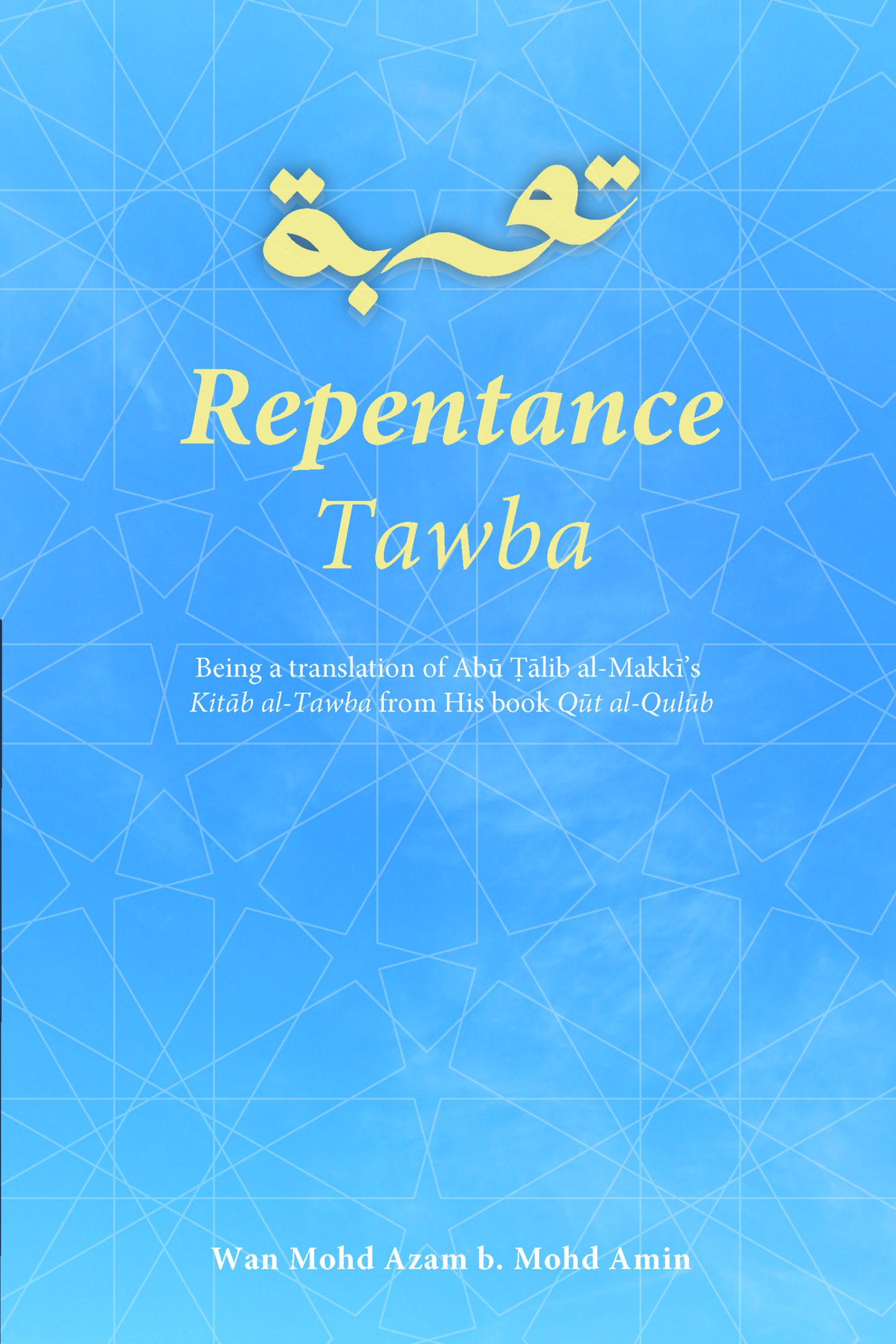
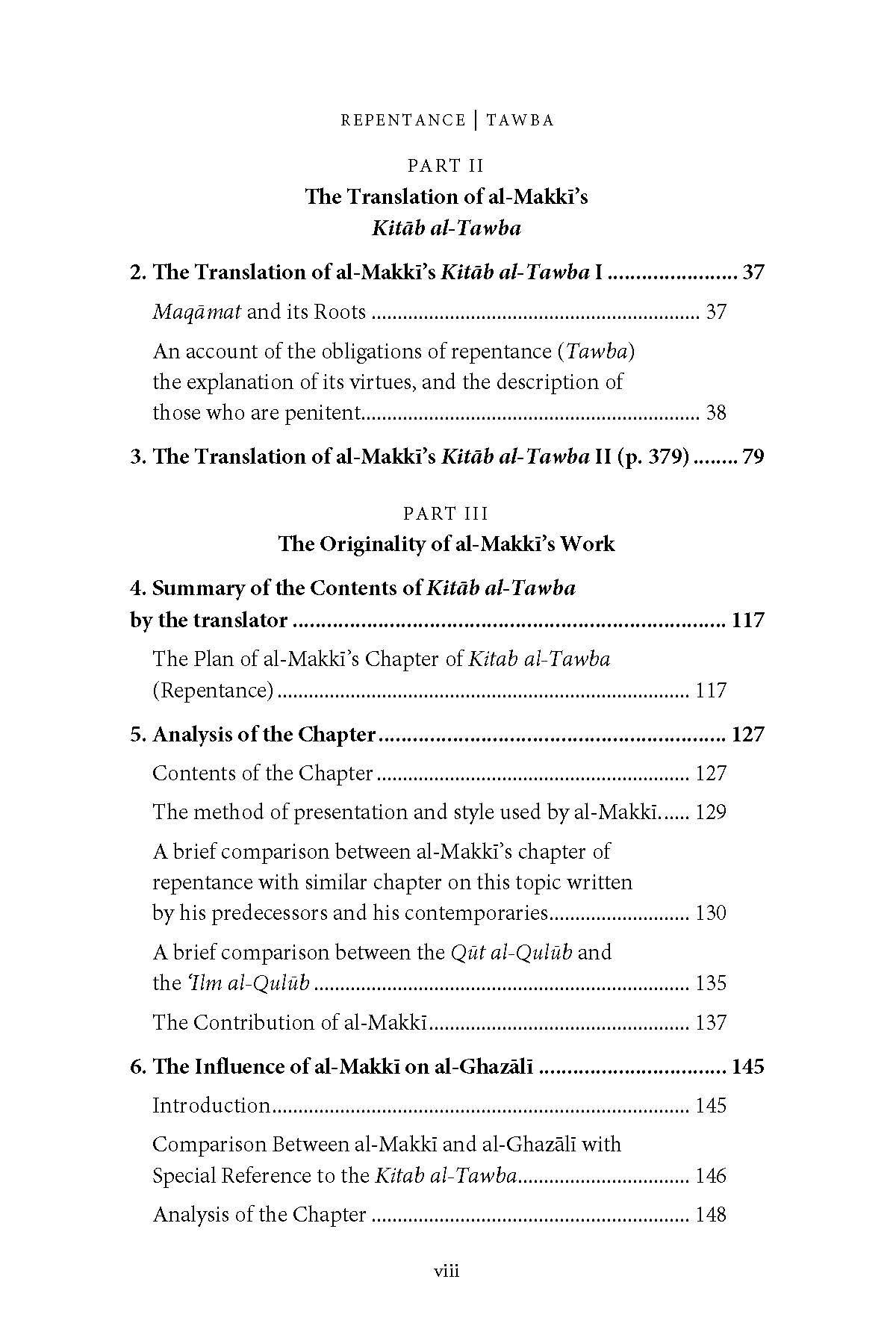






Abu Talib al-Makki was one of the earliest Sufis who lived in the 4th H/10th century. His best known book was Qut al-Qulub, through which later Sufis elevated him to the ranks of their outstanding personalities. The major portion of this book is a translation, for the first time in English, of Kitab al-Tawba (Book of Repentance) from al-Makki’s still extant work, Qut al-Qulub.
Tawba primarily means “return” and encompasses a moral, or ethical, reorientation toward God with piety, emphasizing a positive change from sin to obedience. The root t-w-b signifies “return,” especially “return to God from sin.”
The most common definition of sin is religious: it’s an immoral act against God or divine law. Consequently, Tawba will benefit only those who believe in God, believe in eternal life after death, and believe in accountability to God for their defiance of divine law in this life. Any serious offense, even if it’s not religious, can be called a sin.
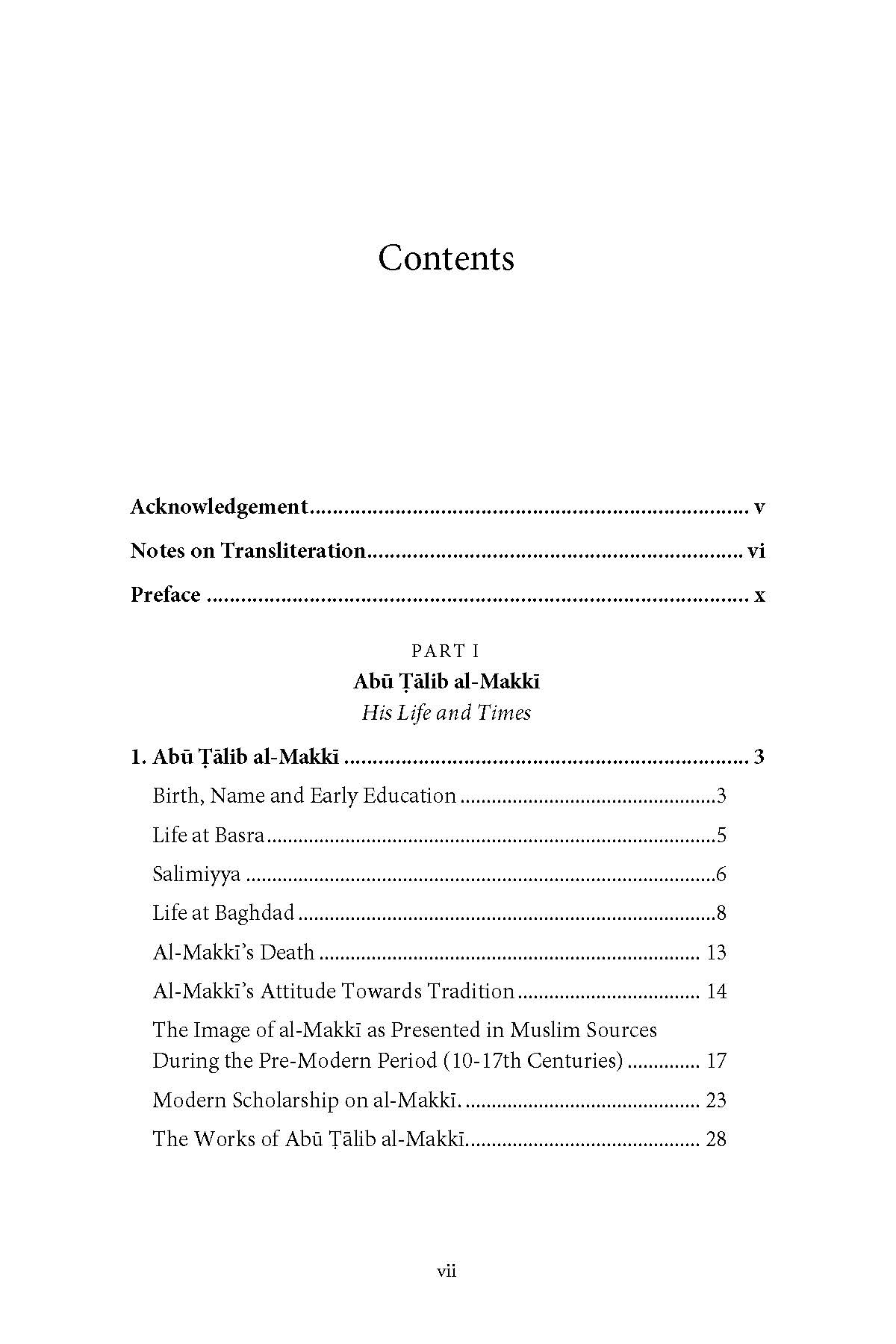
Apart from the main topic al-Tawba, this book contains an extensive chapter on the life and time of al-Makki, and another chapter on al-Makki’s influence on al-Ghazali.
“Early Sufis emphasized tawba as a life-transforming process central to spiritual life, regardless of spiritual maturity, focusing on divine mercy and divine-human relational dynamics. – Tawba is considered a life-changing spiritual act in early Sufi thought. – It is viewed as essential at all stages of spiritual development. Sufis highlight divine mercy as the core of tawba, beyond mere repentance. – The divine act of tawba involves God’s mercy, forgiveness, and compassion. Sufi writings stress the importance of divine acceptance and divine initiative in tawba.” – Atif Khalil, from his Tawba in Early Sufism